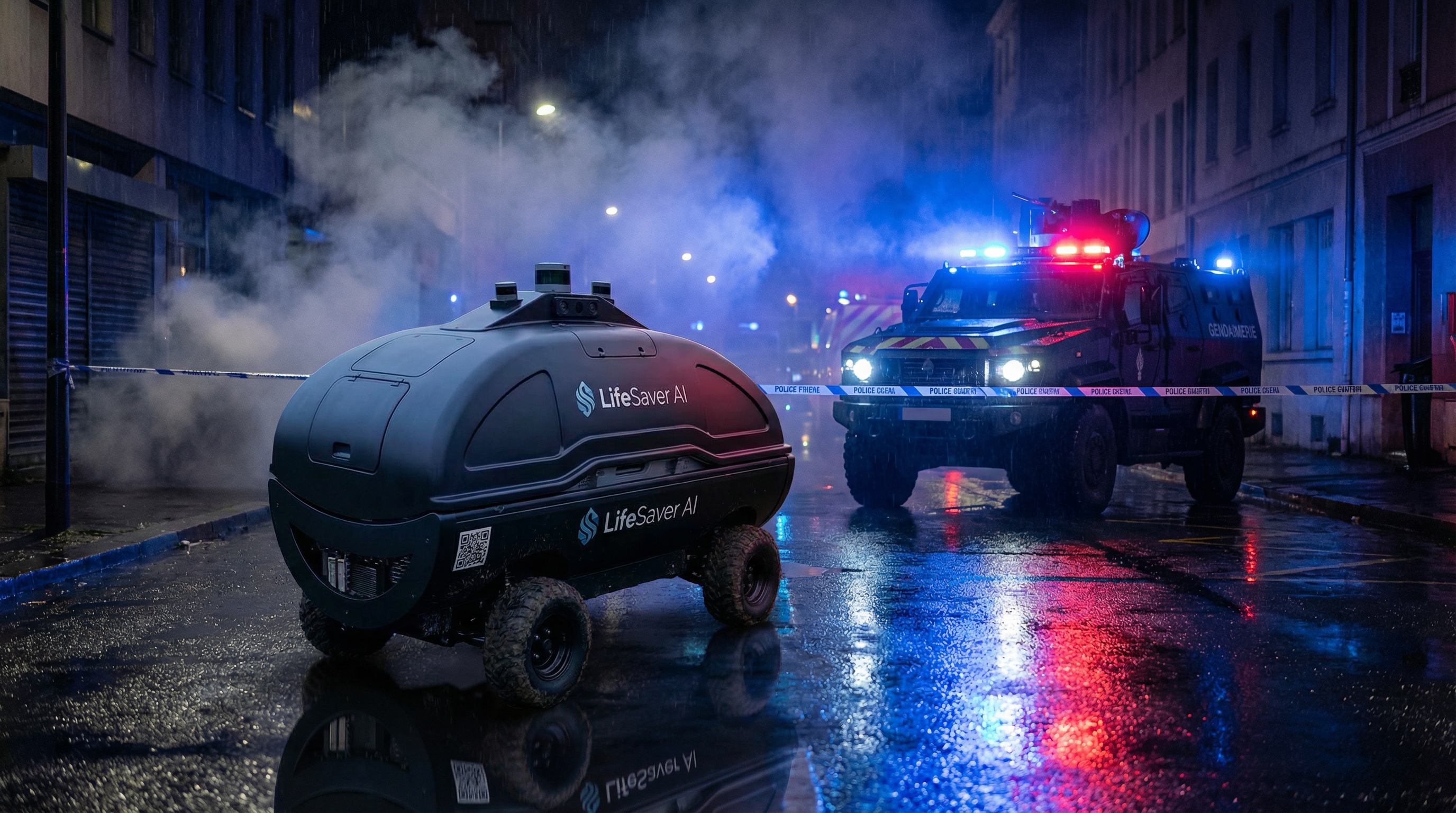
Saving Lives Where Doctors Can’t Reach
An AI-powered amphibious robot that delivers autonomous MARCH protocol care in 3–5 minutes — no physician required. Terrorist attacks, disasters, and hard-to-reach emergencies.
The Problem
Every Minute
Costs Lives
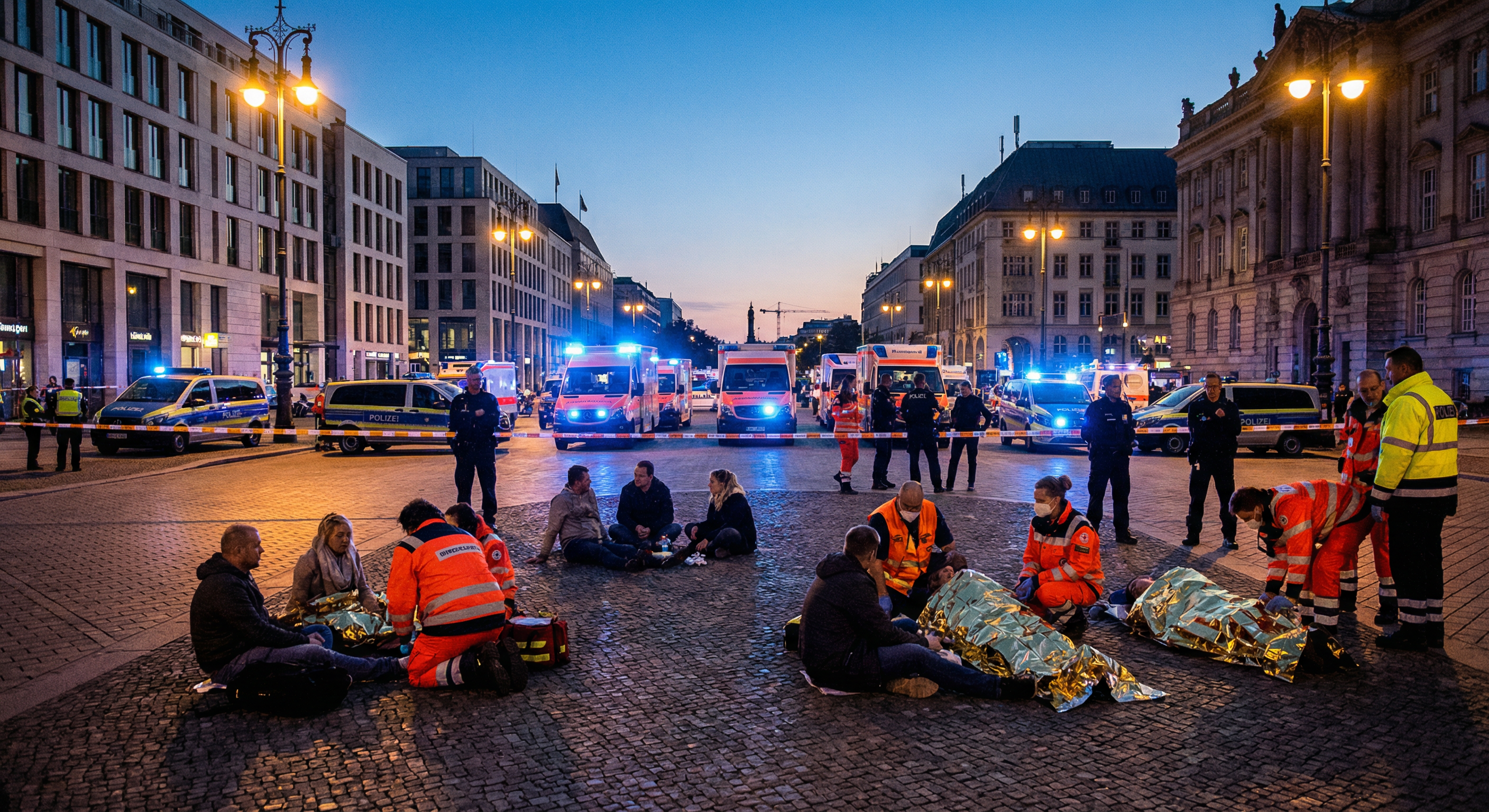
The Hartford Consensus principle — “no one should die from uncontrolled bleeding” — remains unimplemented. Current emergency systems are fundamentally broken.
Tactical Emergency Medical Support requires live medics who are themselves at risk. In mass incidents, casualties far outnumber available medics.
EMS cannot enter an area until police declare it safe. In active shooter scenarios this delay is often fatal — cardiac arrest survival drops 10% every minute.
Floods, earthquakes, industrial accidents — victims wait hours with no response. Crush syndrome and hypothermia kill within 30 minutes of onset.
Our Solution
The Robot
Paramedic
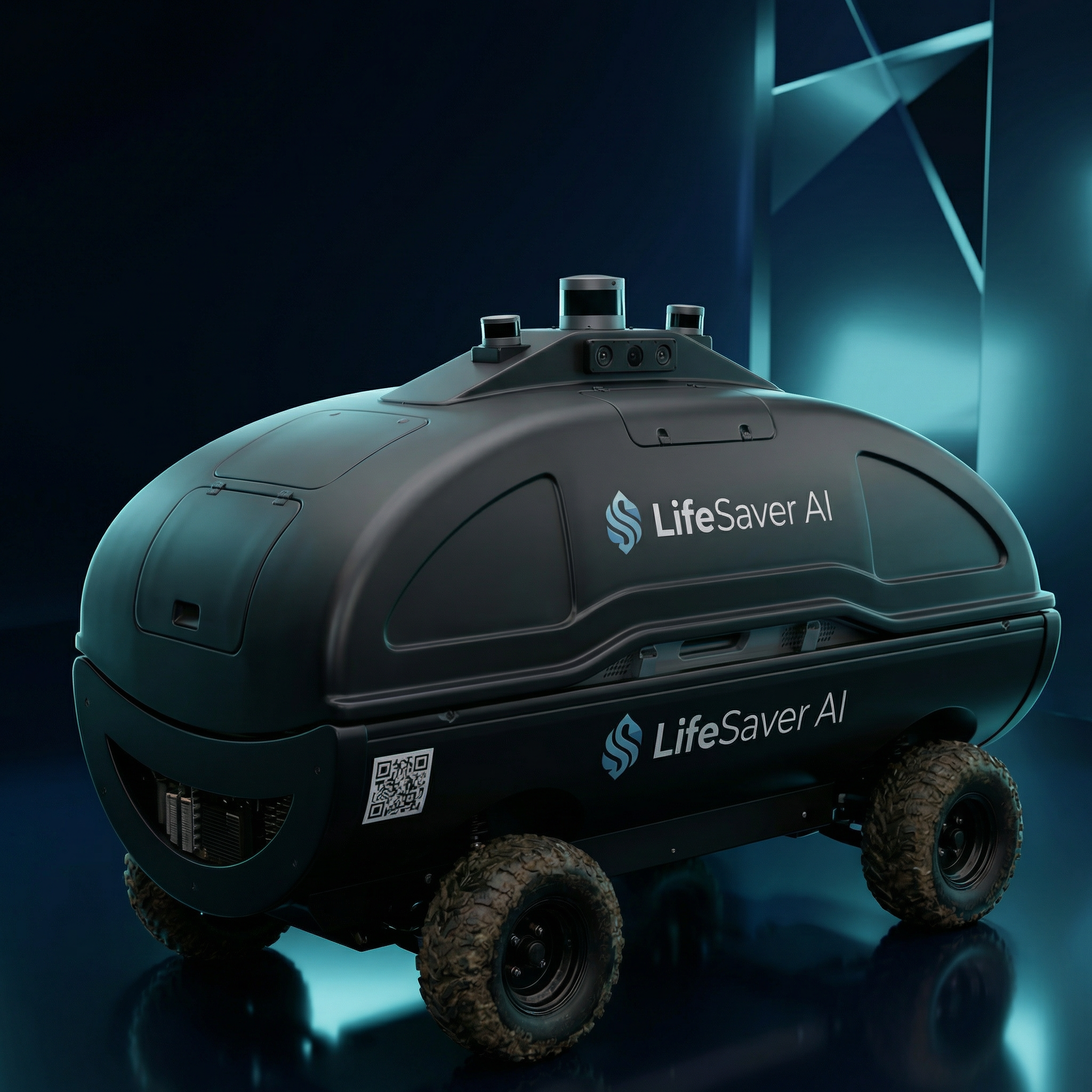
LifeSaver AI combines three breakthrough technologies into one system that arrives in 3–5 minutes without risking human lives.
Tracked/wheeled platform, 40–50 km/h on rough terrain, 3–5 km/h on water. Navigates floods, rubble, and active-threat zones autonomously.
AED, LUCAS CPR, AutoTQ tourniquet, O2matic oxygen, EZ-IO, Celox hemostatic — certified off-the-shelf components.
67 TOPS edge AI for real-time triage, vital sign monitoring, autonomous procedure execution, and 5G/Starlink telemetry to remote physician.
From operator call to first medical intervention — 10× faster than conventional EMS. Scales: 10 capsules = 10 simultaneous patients.
Full Coverage
MARCH Protocol
LifeSaver AI MVP automatically executes the complete MARCH protocol — the international standard for trauma care in mass-casualty incidents.
AutoTQ automatic tourniquets, Celox RAPID hemostatic dressings, wound packing
100% MVPAI-assisted airway monitoring; Phase 2: SRIS autonomous intubation
Phase 2SPEAR decompression for tension pneumothorax, HyFin chest seals, O2matic PRO
100% MVPLUCAS 3.1 automatic CPR, Mindray/Philips AED defibrillation, EZ-IO, EpiPen
100% MVPCapsule heating, thermal shelter for crush syndrome and flood victims
Partial MVPWhy It Matters
Based on statistical analysis of mass casualty incidents — terrorist attacks, natural disasters, industrial accidents, and combat zones.
Real-World Use Cases
Where LifeSaver AI Deploys
Three scenarios where autonomous medical response changes outcomes from fatal to survivable.
A knife attacker injures 8 people. Police cordon the area. LifeSaver AI enters, identifies victims via computer vision, prioritizes by severity, and applies tourniquets while transmitting SAMU telemetry.
Post-match crush: 15 injured, three critical. Two capsules activate from the parking lot. Capsule 1 performs SPEAR decompression; Capsule 2 stabilizes cardiac arrest. SAMU arrives to stable patients.
Flooded neighborhood with 30+ isolated victims. Amphibious capsules navigate water, delivering IO-access fluids to crush syndrome patients, heating against hypothermia, with Starlink telemetry to command.
Market Opportunity
A €500B+ Market
With No Civilian Leader
Three converging trends: rising MCI incidents globally, proven robotics technology, and regulatory readiness. LifeSaver AI is the only full-cycle civilian solution.
Government agencies and civil defense are leading users. Fast-growing due to rising MCI frequency and government budget prioritization.
DARPA Triage Challenge proved feasibility. ARTEMIS achieves 99% accuracy in critical patient recognition. Technology readiness is high.
GIGN, RAID (France), GSG-9 (Germany), GEO (Spain), and equivalents in 30+ countries. Municipal police in Paris, London, Berlin for MCI response.
All competitors are military programs at €150–300K per unit. LifeSaver AI is the only project targeting the affordable civilian market.
Founder
No one should die from uncontrolled bleeding because help arrived too late.
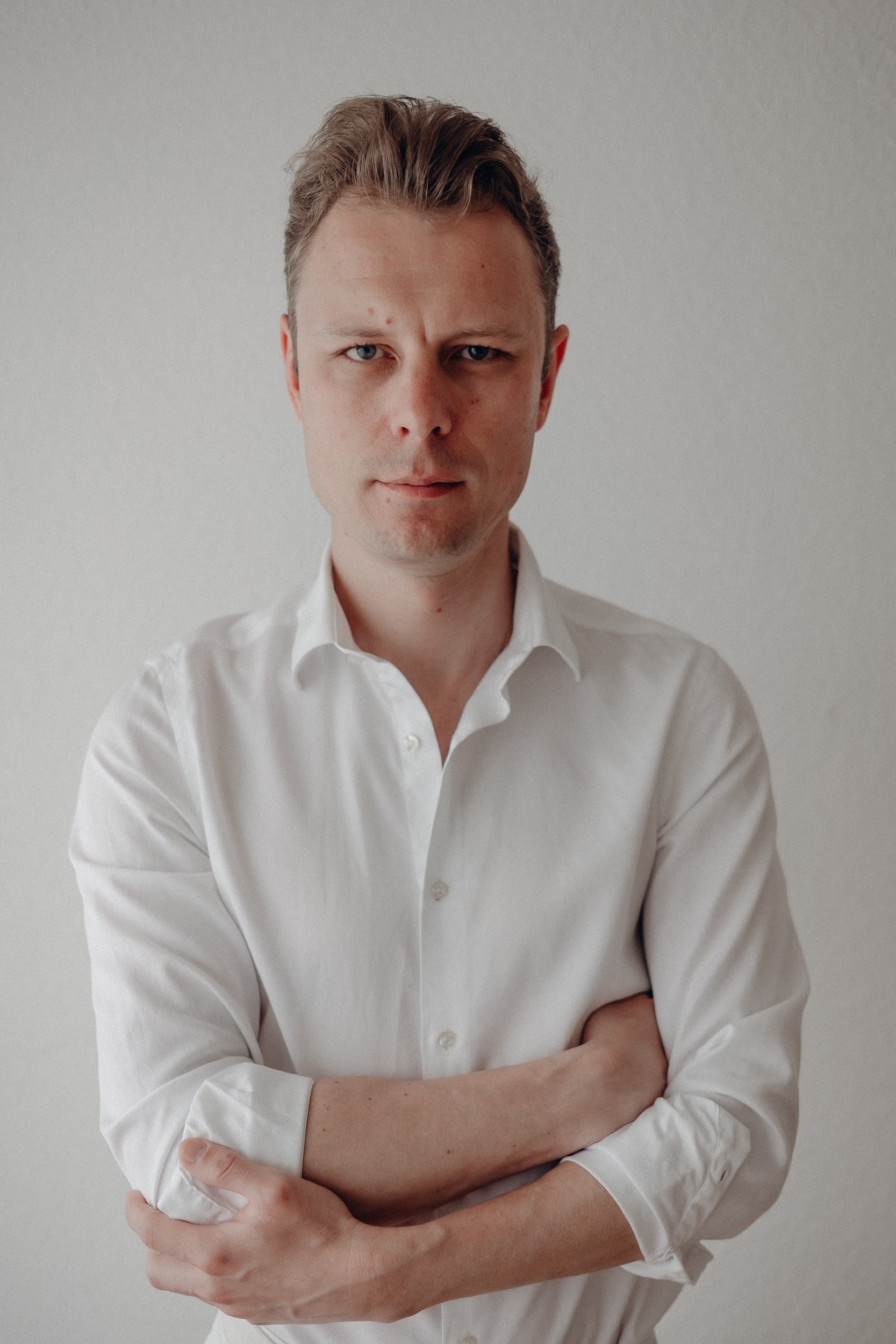
Stanislav Podyachev is the Founder & CEO of LifeSaver AI — the world’s first autonomous medical capsule targeting civilian emergency response. With deep expertise in AI systems, startup strategy, and business development across European tech ecosystems, Stanislav identified the critical gap between military-grade medical robotics and affordable civilian emergency solutions.
Operating from Strasbourg, France — at the intersection of IRCAD surgical robotics, the University of Strasbourg AI cluster, and Bpifrance’s deeptech ecosystem — he is building LifeSaver AI to become the global standard for autonomous pre-hospital trauma care.
Investment Opportunity
Join the
Pre-Seed Round
We are raising a Friends & Family round to fund the working prototype. Financial terms, valuation, equity structure, and projected returns are shared directly with qualified investors under a confidentiality agreement.
5-month runway to a fully functional LifeSaver AI capsule executing MARCH protocol autonomously. Demonstrable to strategic buyers and institutional investors.
Pre-seed investors enter at the lowest valuation in the company's history, ahead of a Series A targeting strategic defense and civil protection buyers across Europe.
Structured as a French SAS with JEI status, CIR 30% R&D cashback, and BSPCE equity incentives. Eligible for Bpifrance co-investment and Horizon Europe grants.
Round size, equity terms, valuation, milestone timeline, and financial projections are available to serious investors by request. No public disclosure.
Financial details shared under confidentiality. Deck sent within 24 hours.
Act Now
Prototype in 5 Months.
Lives Saved in 6.
The technology exists. The market is ready. The regulatory path is clear. LifeSaver AI needs partners who believe no one should die waiting for help that could arrive in 3 minutes.